English willow, pressed by hand, numbered on the shoulder. Between forty and fifty bats a season, and every one of them made to order.
See what is on the rack
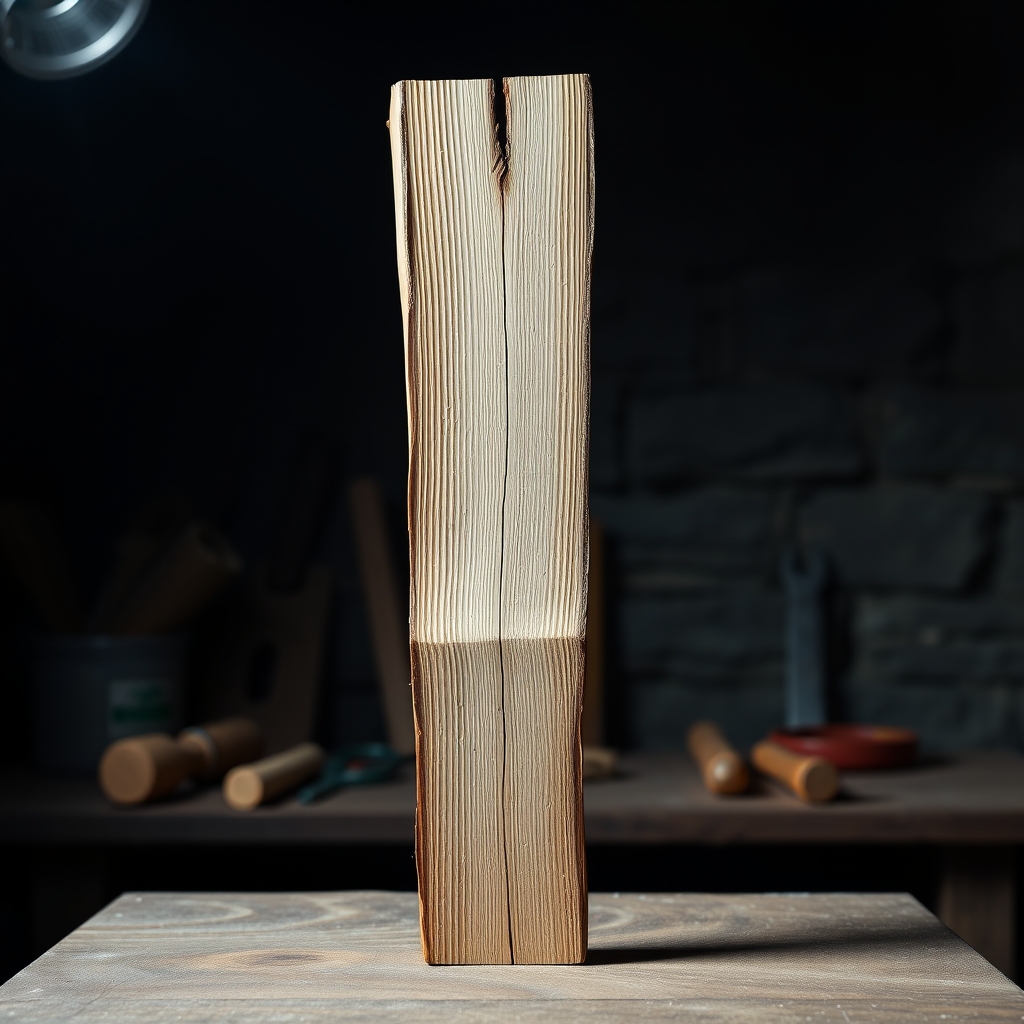
A cricket bat starts as a wedge sawn out of a willow log — a cleft, about 700 mm long, wax-sealed on both ends so it dries slowly instead of splitting itself down the middle. Mine come in from a grower near Bury St Edmunds twice a year, air-dried a season on their side of the water and then another six months in the shed here before I put a plane anywhere near one. What you look for when you pick one up is straight grain running the length of the face, and a blade that is dry through the middle rather than just on the outside. I press it on a hand roller until the face is hard enough to take a new ball and no harder, shape it with a drawknife and a spokeshave, splice the handle in, bind it and finish it. There is no CNC in the building and nothing leaves here with a sticker on it.
People count the grains on the face and decide from that, and it is roughly a guide — eight or nine straight grains usually means older, slower-grown timber that plays well from the first innings rather than the tenth. But grain count says nothing at all about how the bat was pressed, and the pressing is the whole argument. Press it hard and you get a blade that survives anything, needs no knocking in and never really sings. Press it soft and it hits the ball further, needs six hours on the mallet before you take it near a match, and gives you three or four good seasons instead of eight. I press mine soft, because I would rather make you a bat you remember than one you inherit.
Every bat is made to order, numbered on the shoulder and stamped, and posted from Nottingham Road inside three weeks. Tell me which hand you bat and the pick-up weight you want in the message.