Rooikrans and black wattle cleared off Overberg farms, split and stacked a full year before it goes near a fire
See the loads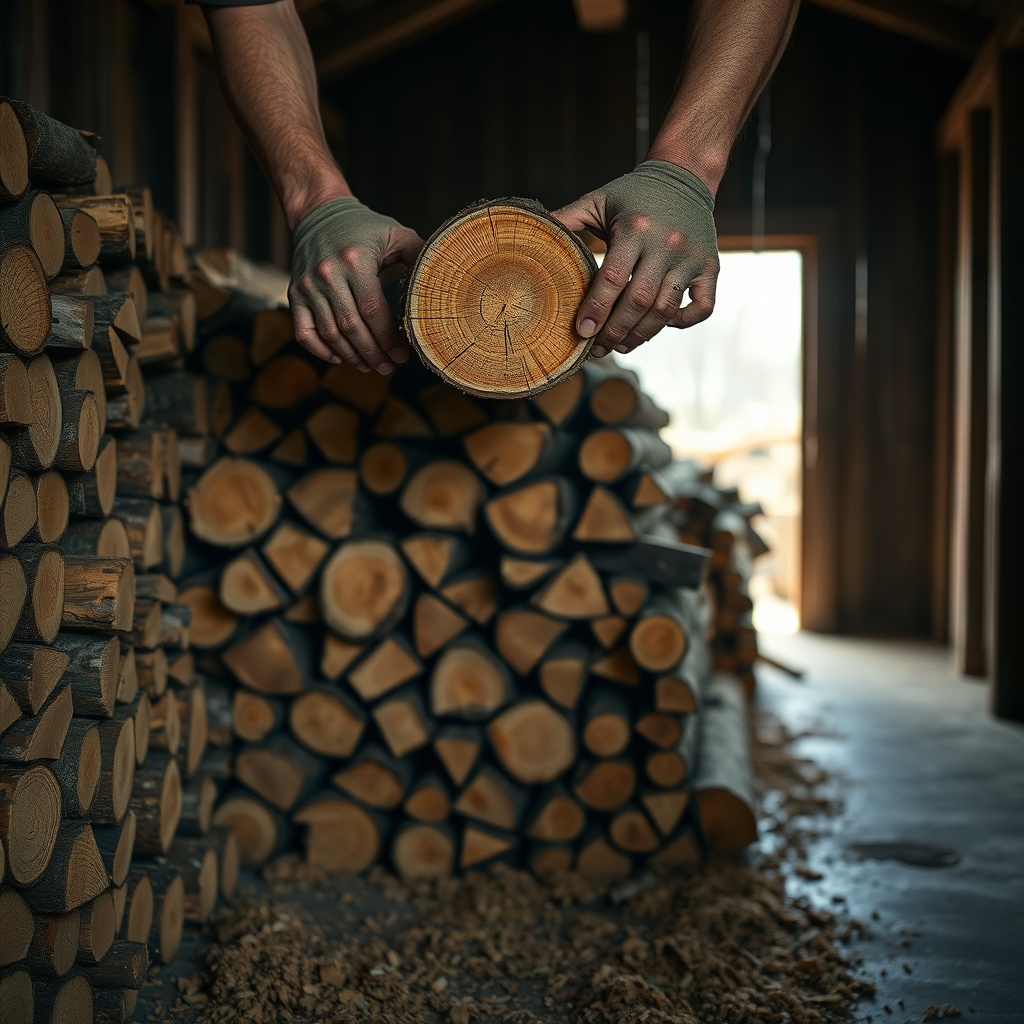
Nearly every complaint about firewood is the same complaint underneath: it was wet. Wet wood hisses, it smokes, it blackens the glass on a closed fireplace, and it spends a quarter of its own heat boiling the water out of itself instead of warming the room. So we split first and stack second. Green rounds go through the splitter the week they come off the farm, because a split face dries about four times faster than a round with its bark still on. From there it goes onto open racks under a shed off the Bot River road, up off the ground, with the southeaster running straight through the stack. Nothing leaves before its second winter. A moisture meter goes into a fresh face off every rack before it loads. Under eighteen percent goes out on the bakkie. Anything above it goes back on the pile and waits.
Most of it goes into houses. The Helderberg and Somerset West from about May, Hermanus and Onrus closer to all year, because the wind down there has people lighting a fire in March. A full load is what gets an average house through a winter, which is why it is the one that leaves the yard most. The rest is trade. A pizzeria on the Hermanus main road takes a double load a month and will not burn anything but wattle. Two guest farms outside Greyton order quarter loads by the dozen and leave one in each cottage. Caterers and the braai competition crowd buy rooikrans by the crate, because at eleven at night it is still giving coals when everything else has gone grey. We are not going to put invented quotes on a web page. If you want a reference, phone the yard and we will give you three people on your own road who order every year.
Tell us your area and roughly how many fires a week, and we will say which load fits, what it costs delivered, and when we are next on your road.


